
Read the two drawing references
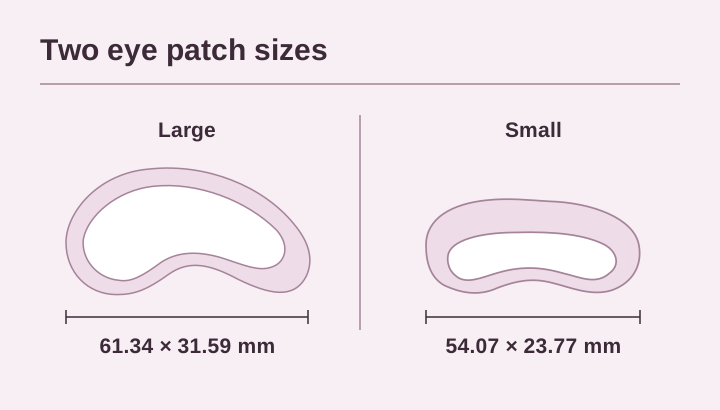
The small drawing gives an overall footprint of 54.07 × 23.77 mm. The large drawing gives 61.34 × 31.59 mm per patch. The two dimensions increase by different proportions. Enlarging the small outline on screen gives a different profile from the supplied large drawing. Open both drawings and follow the outline with the same edge facing upward.
Select a sample for the brief
Make a full-size paper outline for each option and try both on the same placement template. Mark the end or inner curve you would change. Ask for the corresponding sample on its actual carrier, then check the available tray cavity and lifting point. Write the selected drawing revision alongside the intended number of pairs per pack so purchasing can identify exactly which sample to quote.
Frequently asked questions
Does the larger outline imply a larger microarray?
The dimensions describe the outside of the illustrated patch. Request the active-area drawing separately before comparing coverage.