
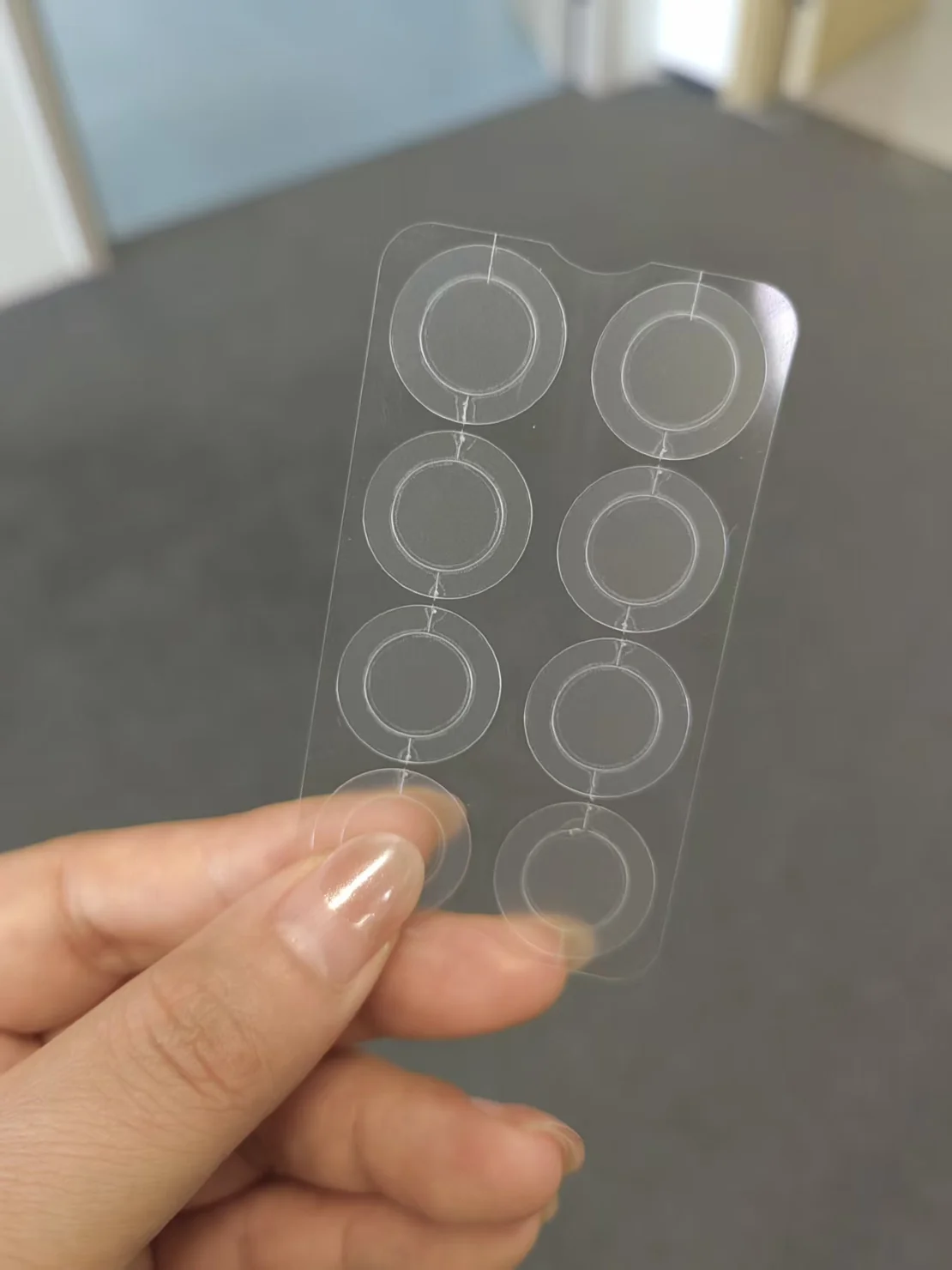
State the peel sequence
Identify which portion should lift first and what surface should remain covered during alignment. Show the sequence with a drawing and physical sample.
A split near a narrow bend can be harder to locate than a straight edge. Check the path on the intended liner rather than an arbitrary paper stand-in.
Check handling and carrier
Review the part and liner under normal lighting. Test whether the user can find and grasp the tab while the neighboring parts remain supported.
Look at the intact backing after removal and record cases where the accessory tears or leaves a small section attached. Location data helps the supplier assess the appropriate change.
Approve the measured presentation
Specify tab length or access clearance in the inspection sheet when it matters. Review the measurement reference and tolerances alongside the sample.
Include the actual pack mouth or tray because the available access can change when the part is lifted from a confined space.
Frequently asked questions
Should a peel tab always be visible through the package?
Visibility can help. The key review is whether the intended peel position is clear after the real package is opened.