
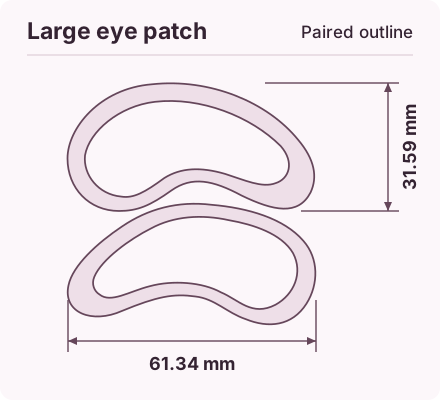
Choose points that stay fixed
Print the two drawing revisions at actual size and align their intended inner ends. Mark the body center and the outer end on each outline. If one tracing can slide or rotate during comparison, the gap between the curves will appear to change. Agree which two locations anchor the comparison and show these points on the overlay you send.
Describe the change in one region
Circle the part of the curve you want to open or tighten. Give a dimension or a trace at that location and mark any ends that should keep their current position. Check the resulting crescent against the protective tray and the working area inside the outline. A change to the inner edge can reduce the band of material available beside that area.
Frequently asked questions
Is a single radius enough to define the crescent?
A shape assembled from several arcs or a freeform curve needs its released vector outline. Ask which dimensions the supplier will use to check the revised sample.